
If you are hiring a video production company in DC, one of the questions that often comes up is this: “How much footage will I get from a full-day shoot?”
This is a very fair question, and also an important one. When a business invests in DC video production, they want to understand what they are receiving, how the day will go, and what to expect in regard to deliverables. However, the answer to this isn’t always straightforward. Different types of shoots will produce different amounts of useable materials. Plus, different goals require different workflows.
Here, we break down what clients can expect from a full-day shoot, why output varies, and what factors might influence the total amount of footage that is captured. This is all presented clearly from a professional team offering video production services in Washington, DC.
What is Meant by a “Full Day” in a Video Shoot?
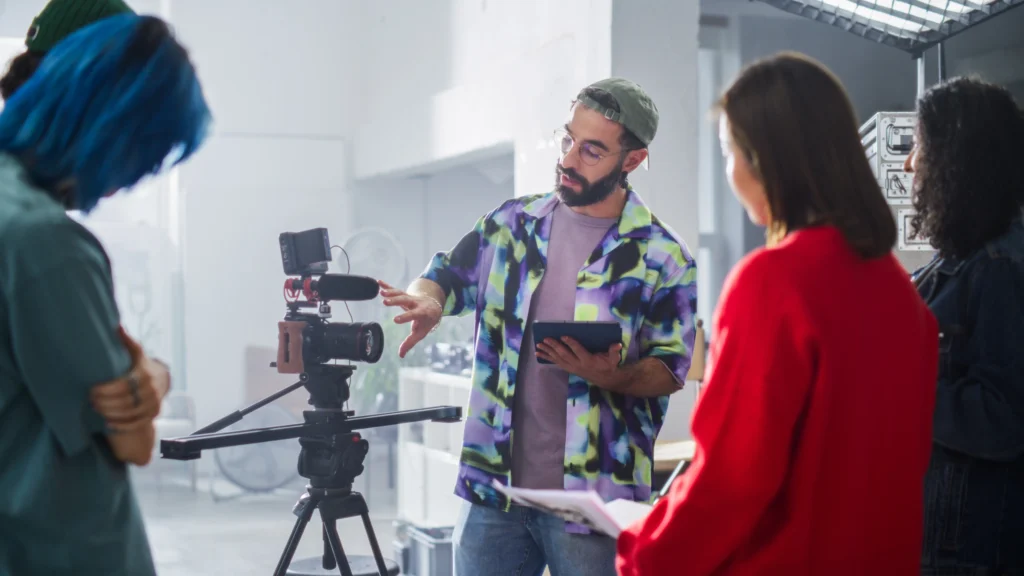
The first question we want to answer is what counts as a “full day” in the video production industry. Generally, it’s meant as spending 8-10 hours on set. This includes setup and breakdown. However, it’s important to know that this isn’t 8-10 hours of filming. It also includes:
- Lighting and audio setup
- Adjusting set and location
- Repositioning cameras
- Moving between scenes
- Coaching on-camera talent
- Reviewing takes
- Resetting for B-roll sequences
Only part of the day is spent actively recording – typically it’s enough to get enough footage for the final product.
How Much Raw Footage Is Common for a Full-Day Shoot?
The amount for footage produced during a full day varies by the type of project. This is what clients can generally expect:
Interview-Based Corporate Shoots: 60-120 Minutes of Raw Footage
For corporate shoots, such as executive interviews, testimonials, documentary-style pieces, or educational content, a full day shoot generally produces 1-2 hours of interviews and 1-3 hours of B-roll.
Even though only a few minutes will make it into the final cut, capturing a range of responses and visuals allow the editor to build a cohesive story.
Event Coverage: 3-6 Hours of Raw Footage (10-20+ Hours with Multi-Camera Coverage)
Events generally produce more continuous material. With a standard single-camera setup, most clients receive 3-6 hours of raw footage from a full day of shooting.
However, if your event includes several presentations, breakout rooms, or many sessions, and you are using multiple cameras, the total raw footage amount greatly increases.
For example, when covering:
- Keynotes
- Panel discussions
- Workshops
- Product demos
- Awards ceremonies
…with two or three cameras rolling, every presentation becomes multiple recordings. A single 45-minute keynote that is captured from three different angles can create more than two hours of total footage. (A 45-minute keynote × 3 cameras = 135 minutes (2 hours 15 minutes).
Multiply that over an entire conference day, and it’s very common to end up with 10-20 hours, or more, of raw footage.
This type of coverage gives your editor a lot more flexibility, offers more visual variety, and allows for cleaner transitions. However, it also means that clients should expect a bigger volume of files.
Scripted Commercial or Promo Shoots: 30–90 Minutes of Raw Footage
Scripted productions naturally produce less total footage, but they require more planning and lighting work. Since scenes are repeated and carefully controlled, the final raw footage generally ranges from 30-90 minutes.
These shoots focus on intentional, cinematic quality as opposed to quantity.
Fitness or Instructional Content: 60–180 Minutes of Raw Footage
For gyms, instructors, or online course creators, which are common in video production in DC, a full day shoot often includes:
- Several full class recordings
- Individual instructional segments
- Branded intro/outro shots
- Lifestyle or studio B-roll
Typically, these usually result in 1–3 hours of raw footage total.
What Influences How Much Footage You Get?
There are a few factors that affect the total amount of footage a client gets. These include:
- Number of cameras — Multi-camera shoots multiply the total footage.
- Production complexity — Cinematic lighting setups reduce rolling time; documentary style increases it.
- Talent performance — Multiple takes add time; polished performers reduce it.
- Locations — Moving between spaces decreases total recording time.
- Scripted vs. unscripted — Scripted shoots generate less footage but more precise content.
What Do Clients Actually Get Following a Shoot?
Even if a shoot generates several hours of raw material, the final deliverable depends on:
- Your goals
- The package you select
- The agreed-upon edits
- Whether you need long-form, short-term, or both
A reputable DC video production company will clarify everything in advance, such as if the client gets raw footage or edited deliverables. This way, you know exactly what you will get.
Raw Footage Amount Doesn’t Affect Final Video Quality
Many clients assume that if they get a lot of footage, they will have higher quality. This isn’t true, however. What matters is quality, planning, and editorial strategy. A team like ours, which offers video production services here in Washington, DC, can turn even a small amount of filmed content into a polished commercial that can outperform footage that was sloppily put together.
Final Thoughts
Understanding how much footage you can expect helps clients set a realistic expectation, plus it ensures a smooth collaboration. From interviews and events to scripted promos, every type of shoot offers a different amount of raw footage; but a full-day session always provides more than enough to create compelling, professional content.
If you are interested in learning more about how Silver Streak Media can help with your project, reach out. We can plan together to help you get the most value out of your full-day production.


